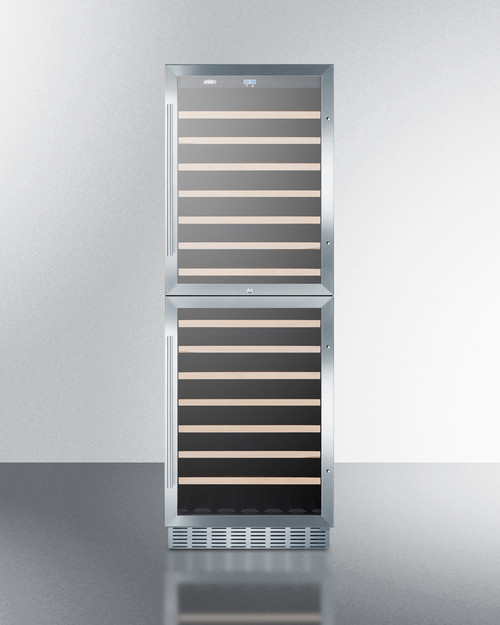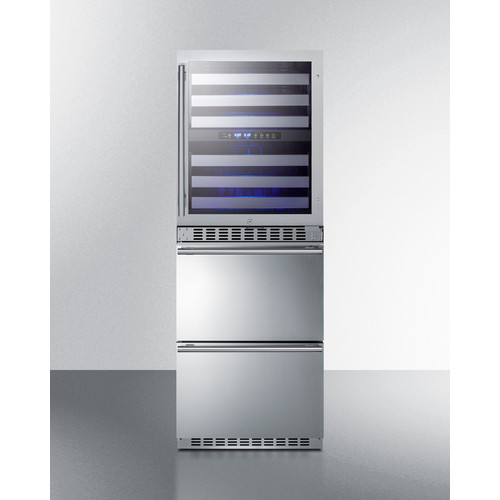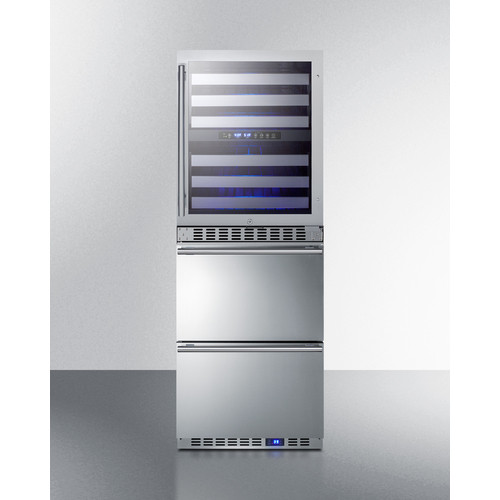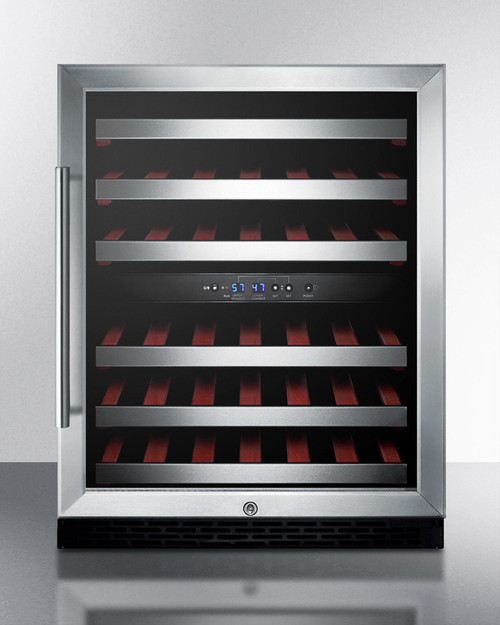


Built for controlled storage and continuous service, this dual-section wine cellar delivers precise temperature management across two independent zones while offering substantial bottle capacity for high-traffic operations. Professionals benefit from separate cooling circuits that maintain ideal conditions for reds and whites simultaneously, supporting cellar programs in restaurants, hotels, and hospitality venues. Designed for commercial use, the unit combines an efficient layout, robust construction, and certified safety to integrate seamlessly into both back-of-house and front-of-house settings.
LongDescription#@#NA#@@#Cleaning Instructions#@#Unplug the Summit SWC1875B and remove bottles. Wipe interior with a mild soap solution and a soft cloth. Clean glass doors with non-abrasive cleaner. Vacuum condenser coils at the bottom monthly to maintain efficiency. Degrease vents and surrounding areas to reduce fire risk. Sanitize shelves and door seals with a food-safe sanitizer to stop bacteria. Dry all surfaces before restoring power. Inspect seals and replace if worn to avoid breakdowns and failed CSA inspections.#@@#Additional Info#@#Summit SWC1875B offers dual-zone temperature control in a 23.63" W black cabinet for 118 bottles. It uses R-600a refrigerant, operates on 115 volts/60 Hz at 2.8 amps, and meets CSA and ETL safety standards, ideal for restaurants and bars.#@@#General Info#@#Description #@#
Built for controlled storage and continuous service, this dual-section wine cellar delivers precise temperature management across two independent zones while offering substantial bottle capacity for high-traffic operations. Professionals benefit from separate cooling circuits that maintain ideal conditions for reds and whites simultaneously, supporting cellar programs in restaurants, hotels, and hospitality venues. Designed for commercial use, the unit combines an efficient layout, robust construction, and certified safety to integrate seamlessly into both back-of-house and front-of-house settings.
#@@# Capacity Management#@#
Hold up to 118 bottles in organized racks that maximize vertical space within a 23.63-inch footprint. Operators can stage large inventories for rotation and events without wasting floor area, improving stock control and reducing restock frequency.
#@@# Dual Zone Control#@#
Operate two independent temperature zones to store different styles at targeted set points, preserving varietal character and serving quality. Staff can assign each section to reds, whites, or sparkling selections and adjust set points without affecting the other compartment.
#@@# Glass Door Presentation#@#
Showcase inventory behind insulated glass doors that provide visibility while limiting thermal transfer, enabling service teams to select items quickly. Managers can present selections to guests without exposing stock to unnecessary temperature swings.
#@@# Energy and Safety Compliance#@#
Deploy a unit certified to CSA and ETL sanitation standards and engineered with R-600a refrigerant for lower global warming potential. Facilities achieve code compliance and reduced environmental impact while maintaining reliable cooling performance.
#@@# Serviceable Mechanical Layout#@#
Access a bottom-mounted compressor and service components that simplify maintenance procedures and reduce downtime.
#@@#Delivery Details#@#
• Please ensure to handle the product with utmost care.
• Check if the product you have received has all the essential parts and accessories.
• Make sure to examine the product for damage before signing the delivery receipt.
• Contact customer service for delivery concerns.
• Delivery times may vary based on location.#@@#deliverynotes#@#Clear access required for delivery. Signature needed upon receipt. Inspect for visible damage before accepting to ensure proper delivery.#@@#Maintenance Guide#@#Perform monthly condenser coil cleaning to maintain cooling efficiency and reduce energy draw. Inspect door gaskets weekly for cracks or gaps and replace compromised seals to prevent temperature loss. Calibrate thermostats quarterly and verify dual-zone setpoints independently. Drain and clean drip trays every two months to avoid microbial growth. Tighten electrical connections annually and document amperage and voltage readings for CSA and ETL compliance.