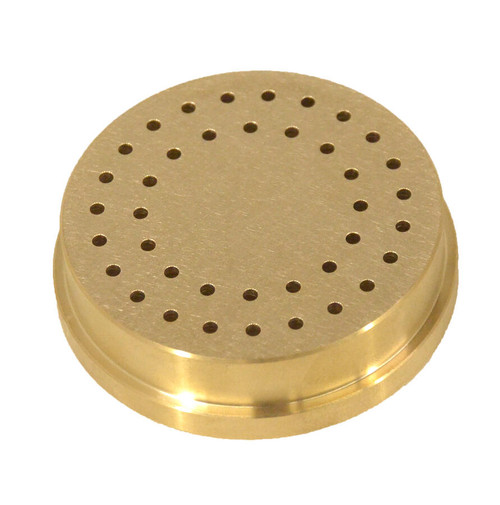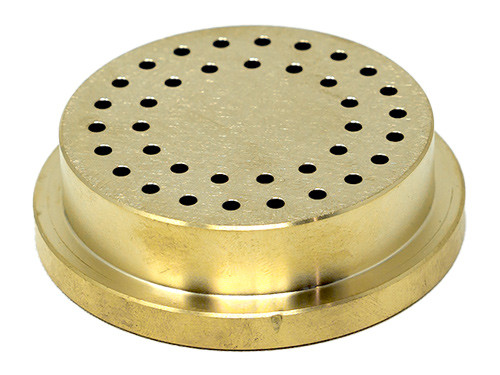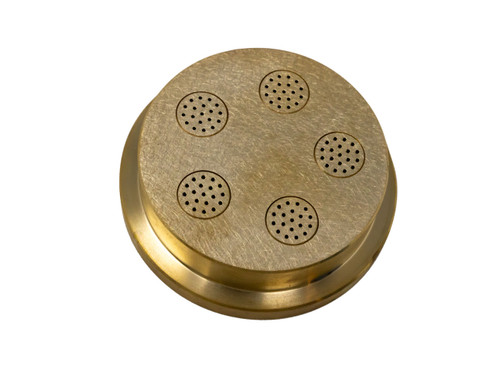

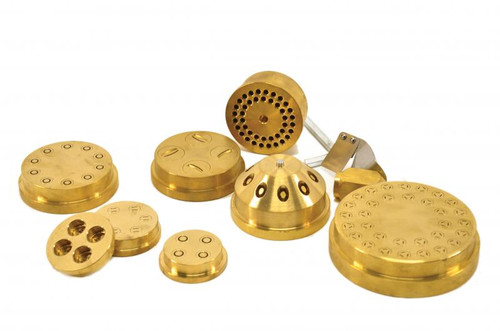
Engineers designed the profile to yield true round spaghetti with a 2.5mm diameter, ensuring consistent cook times and predictable portion control. Operators benefit from reduced product variation and simplified quality checks during continuous runs.
LongDescription#@#NA#@@#Cleaning Instructions#@#Unplug extruder and cool before disassembly. Remove the #12 brass spaghetti pasta die and soak in warm water with mild detergent for 10–15 minutes. Scrub passages with a soft brush to remove dough and starch. Rinse thoroughly with potable water and inspect for residue. Sanitize per CSA guidelines if required. Dry completely and reassemble. Clean daily to prevent bacterial growth, reduce fire risk from grease, lower energy use, and avoid equipment failures.#@@#Additional Info#@#Omcan USA 13406 brass spaghetti die produces 2.5 mm spaghetti for commercial machines, fits #12 mounting, weighs 0.10 pounds, and meets CSA standards; chefs gain durable, food-safe parts for high-volume production.#@@#General Info#@#Description #@#
Engineers designed the profile to yield true round spaghetti with a 2.5mm diameter, ensuring consistent cook times and predictable portion control. Operators benefit from reduced product variation and simplified quality checks during continuous runs.
Manufacturers machined the die from brass to balance wear resistance and form stability under sustained pressure. Chefs receive durable contact surfaces that resist deformation and deliver repeatable results over extended production cycles.
Tooling maintains a 2.5mm opening to control strand gauge precisely, enabling consistent hydration and heat transfer during boiling. Kitchen staff achieve uniform texture and appearance batch after batch, reducing rework and waste.
Engineers kept the mass near 0.10 pounds to ease installation and removal during changeover or clean cycles. Technicians perform faster maintenance and minimize downtime when swapping dies between production runs.
Design tolerances match common pasta extruder fittings, allowing integration without extensive adapter work in many commercial setups. Procurement teams reduce retrofit expenditures and accelerate deployment on existing lines.
Manufacturing practices for brass dies target safe contact with dough formulations and high temperatures during extrusion. Quality managers gain confidence in material selection and documentation for routine audits.
#@@#Delivery Details#@#
• Please ensure to handle the product with utmost care.
• Check if the product you have received has all the essential parts and accessories.
• Make sure to examine the product for damage before signing the delivery receipt.
• Contact customer service for delivery concerns.
• Delivery times may vary based on location.#@@#deliverynotes#@#NA#@@#Maintenance Guide#@#Inspect the brass die before each production cycle and remove debris with a soft brush to prevent contamination and variance. Clean with warm water and neutral detergent; rinse and dry immediately to avoid corrosion. Lubricate mating surfaces lightly with food-grade lubricant monthly and torque hardware to specifications. Monitor output diameter; replace the die when wear increases scrap or alters cooking times. Record maintenance actions in a log.