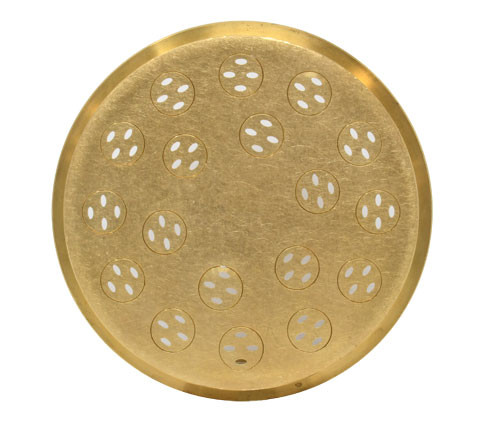


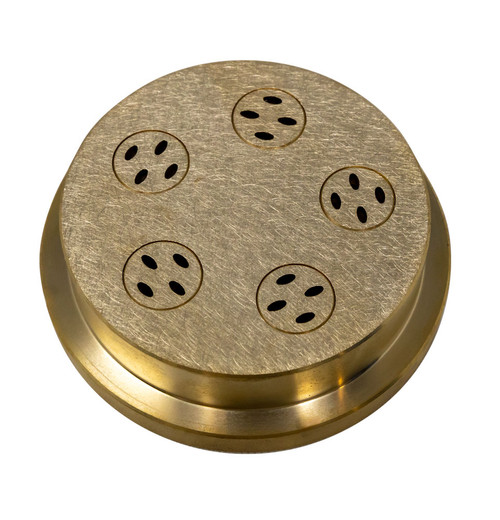
Handle high-volume pasta production without sacrificing cut consistency or machine longevity. This brass linguine die produces uniform 2.9mm strands while resisting wear from continuous operation, enabling kitchens to maintain steady output for large service periods. Operators gain predictable results and reduced downtime through a durable, precisely machined component suited to commercial pasta extruders.
LongDescription#@#NA#@@#Cleaning Instructions#@#Unplug equipment and cool hot surfaces before cleaning. Remove dies and soak in warm water with mild detergent for 10–15 minutes. Scrub brass with a soft brush to remove dough; avoid steel wool. Rinse thoroughly and air dry or towel dry with a lint-free cloth. Clean surrounding hopper and extrusion pathways to remove residue and bacteria. Inspect seals and fasteners; tighten as needed to prevent leaks and contamination. Regular cleaning reduces fire risk, equipment wear, and failed inspections.#@@#Additional Info#@#Omcan USA 13333 brass linguine pasta die makes 2.9 mm strands; chefs achieve consistent cuts for high-volume production. Durable brass, 6 mm depth, and 8 mm width optimize flow.#@@#General Info#@#Description #@#
Handle high-volume pasta production without sacrificing cut consistency or machine longevity. This brass linguine die produces uniform 2.9mm strands while resisting wear from continuous operation, enabling kitchens to maintain steady output for large service periods. Operators gain predictable results and reduced downtime through a durable, precisely machined component suited to commercial pasta extruders.
#@@# Material Choice#@#
Brass composition resists corrosion and maintains dimensional stability under repeated thermal cycles, ensuring consistent strand thickness over time. Technicians observe stable extrusion behavior and experience fewer replacements compared with softer or plated alternatives.
#@@# Strand Profile#@#
Linguine shape yields flat, ribbon-style pasta with a 2.9mm thickness that matches common portioning and cooking specifications. Chefs obtain predictable cook times and mouthfeel, facilitating menu standardization across shifts.
#@@# Precision Depth#@#
A 6mm depth controls dough flow and cut geometry to produce even mass distribution across strands, reducing breakage and minimizing rework. Production managers measure lower scrap rates and achieve tighter tolerances during automated forming.
#@@# Compact Dimensions#@#
An 8mm width and compact footprint allow integration into a range of commercial extruder heads without extensive modification. Maintenance personnel complete die swaps quickly, shortening service intervals and preserving line throughput.
#@@# Low Mass#@#
At approximately 0.10 pounds, the die presents minimal inertial load during high-speed extrusion cycles, reducing mechanical stress on drive components. Engineers note lower bearing wear and extend component life cycles when using lightweight dies.
#@@# Compatibility Standards#@#
Manufactured to fit common pasta equipment interfaces and labeled for professional use, the die aligns with CSA and related safety expectations for food equipment applications.
#@@#Delivery Details#@#
• Please ensure to handle the product with utmost care.
• Check if the product you have received has all the essential parts and accessories.
• Make sure to examine the product for damage before signing the delivery receipt.
• Contact customer service for delivery concerns.
• Delivery times may vary based on location.#@@#deliverynotes#@#NA#@@#Maintenance Guide#@#Use brass #17 linguine die for 2.9mm strands; inspect die faces daily for residue and clean with a nylon brush and warm water to ensure quality. Apply light food-grade oil to contact surfaces weekly to prevent corrosion and ease assembly; wipe excess with a lint-free cloth. Check die seating and fasteners before each run and torque to specs. Replace seals annually or when deformation occurs. Log maintenance actions for traceability and CSA compliance.