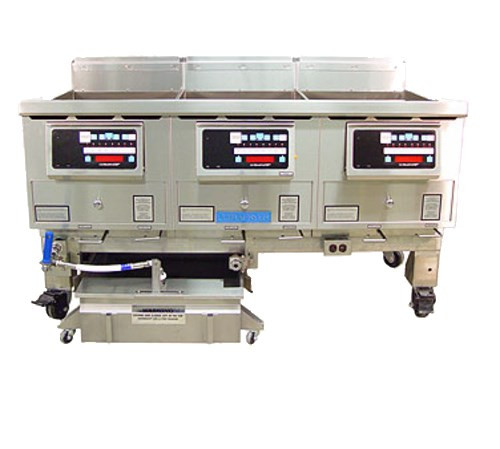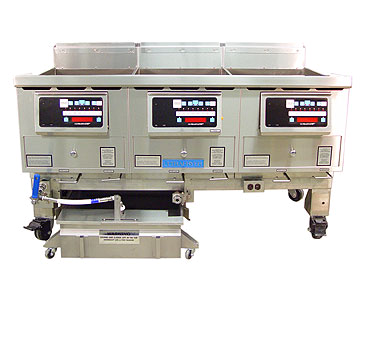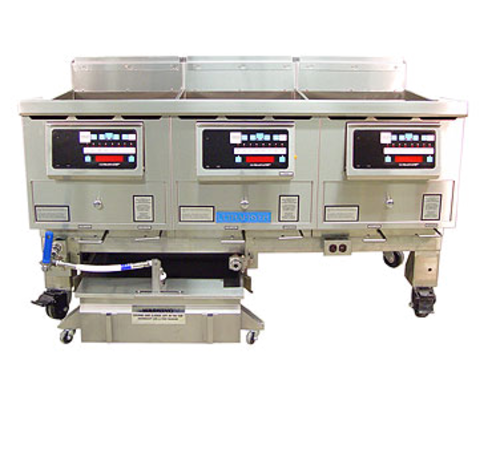


Built for high-volume frying, this liquid propane, three-pot fryer ensures consistent production, integrated filtration, and simple controls to maintain oil quality and throughput. Designed for heavy-duty use, it features three 125-pound vats, phased-array heat exchange, and a 225,000 BTU output to handle demanding service periods. Operators benefit from precise temperature control and easy maintenance in a stainless-steel unit ideal for commercial kitchens, hospitals, universities, and large catering operations.
LongDescription#@#NA#@@#Cleaning Instructions#@#Turn off gas and let oil cool to below 120°F before draining. Remove baskets and filter cartridge; filter oil per UltraClear Plus instructions. Wipe vats and exterior stainless steel with a mild degreaser and soft cloth. Clean burners and vents to remove grease buildup and inspect ignition components. Vacuum condenser coils and check thermostat operation. Dry all surfaces completely, replace seals if worn, then refill and test-fire per manufacturer specs to confirm safe operation.#@@#Additional Info#@#Ultrafryer B-P20-20-3-UCP-LP features three 20" frypots, 125 lbs. capacity each, liquid propane, 225,000 BTU, thermostatic controls, UltraClear Plus filtration, ENERGY STAR, NSF, stainless steel frame, casters, and cCSAus compliance.#@@#General Info#@#Description #@#
Built for high-volume frying, this liquid propane, three-pot fryer ensures consistent production, integrated filtration, and simple controls to maintain oil quality and throughput. Designed for heavy-duty use, it features three 125-pound vats, phased-array heat exchange, and a 225,000 BTU output to handle demanding service periods. Operators benefit from precise temperature control and easy maintenance in a stainless-steel unit ideal for commercial kitchens, hospitals, universities, and large catering operations.
#@@# Three Fry Pots#@#
Three 125-pound stainless-steel vats offer segmented frying capacity, allowing multiple products to cook simultaneously without flavor crossover. Each vat holds two baskets, enabling production scaling while isolating oil types and cook schedules for flexibility.
#@@# High Heat Output#@#
The 225,000 BTU system ensures rapid recovery and stable temperatures during peak cycles, reducing sag between loads. This improves cycle times and yield control for batch-fried menu items.
#@@# Phased-Array Heat#@#
The PAR-2 phased-array heat exchanger evenly distributes energy across vats, minimizing hotspots and extending oil life. Consistent heat reduces product variance, ensuring uniform texture and color.
#@@# Integrated Filtration#@#
UltraClear Plus filtration captures particulates and simplifies oil maintenance, extending oil life and reducing replacement costs. Scheduled filtration cycles maintain product quality and minimize downtime.
#@@# Electronic Controls#@#
Electronic ignition, thermostatic controls, and a melt cycle provide precise temperature management and safe handling of solid shortening. Operators set target temperatures and rely on consistent control for critical recipes.
#@@# Commercial Design#@#
A stainless-steel frame, cabinet, and vats meet NSF and CSA standards, resisting corrosion in kitchen environments. Mobile casters, two with brakes, allow repositioning for servicing or workflow changes without losing stability.
#@@#Delivery Details#@#
• Please ensure to handle the product with utmost care.
• Check if the product you have received has all the essential parts and accessories.
• Make sure to examine the product for damage before signing the delivery receipt.
• Contact customer service for delivery concerns.
• Delivery times may vary based on location.#@@#deliverynotes#@#NA#@@#Maintenance Guide#@#Inspect burners and pilot assemblies weekly for carbon buildup; remove deposits with a brass brush and compressed air to maintain 225,000 BTU output. Drain and filter oil daily using the UltraClear Plus system; replace filter media per manufacturer schedule. Tighten gas fittings monthly and test for leaks with approved solution. Calibrate thermostatic controls quarterly to ±2°F. Lubricate caster brakes annually and verify NSF and CSA labels remain legible.