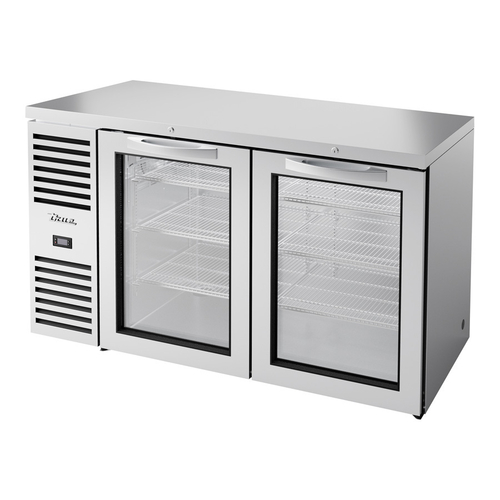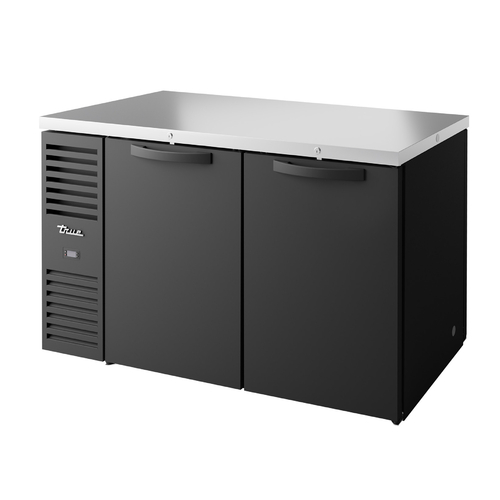

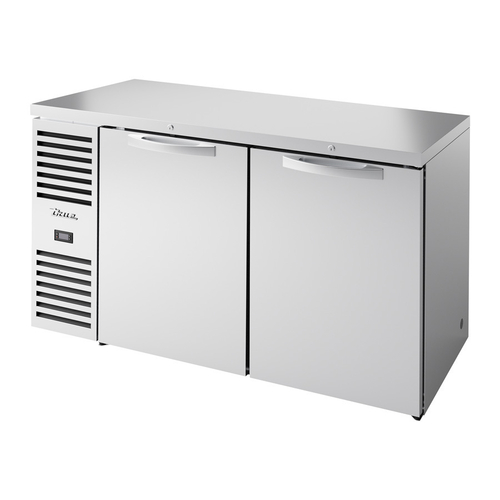
Stop sacrificing cold capacity for reliability. This stainless steel back bar cooler combines consistent refrigeration performance with commercial-grade construction to support busy service lines and continuous operation. Designed for food service professionals, the unit delivers dependable temperature control and efficient footprint management for bars, cafeterias, and hospitals.
LongDescription#@#NA#@@#Cleaning Instructions#@#Unplug the unit and remove contents. Wipe the interior with mild soap and warm water, scrub shelves with a soft brush, and rinse. Clean condenser coils monthly with a coil brush to remove dust. Sanitize food contact surfaces with a USDA-approved solution and allow contact time. Inspect door gaskets for cracks and replace when worn. Dry completely before reconnecting power. Regular cleaning prevents foodborne illness, cuts fire risk, lowers energy use, and reduces repairs.#@@#Additional Info#@#The True TBR60-RISZ1-L-S-SS-1 is a 60" stainless steel, two-door back bar cooler operating on 115 volts, 60 Hz, 3.2 amps, and a 1/4 HP compressor; it uses R-290 refrigerant, meets UL and cUL certifications, is made in the USA, and weighs 405 pounds.#@@#General Info#@#Description #@#
Stop sacrificing cold capacity for reliability. This stainless steel back bar cooler combines consistent refrigeration performance with commercial-grade construction to support busy service lines and continuous operation. Designed for food service professionals, the unit delivers dependable temperature control and efficient footprint management for bars, cafeterias, and hospitals.
#@@# Solid Construction.#@#
Constructed with a stainless steel exterior and top, the cabinet provides corrosion resistance and easy cleaning for daily use. Engineers built the frame to withstand continuous traffic while maintaining a professional appearance.
#@@# Efficient Refrigeration.#@#
The system uses R-290 refrigerant and a 1/4 HP compressor to maintain setpoints with lower energy draw compared to older refrigerants. Operators will see stable temperatures across the cabinet, reducing spoilage risk for perishable items.
#@@# Two Solid Doors.#@#
Two swing solid doors minimize cold loss during service and provide secure storage for products that require darkness and consistent temperatures. Staff can load and retrieve items quickly while the doors preserve internal setpoints.
#@@# Compact Depth Design.#@#
With a front-to-back depth of 24.88 inches and an overall width of 60 inches, the cooler fits tight back bar footprints without sacrificing usable capacity. Managers can maximize floorplan efficiency in constrained layouts.
#@@# Service-Ready Electrical.#@#
The unit operates on 115v, 60 hertz, single-phase power with a NEMA 5-15P plug and draws 3.2 amps, simplifying installation in standard commercial circuits. Technicians will appreciate the straightforward electrical requirements for retrofits and new installs.
#@@# Regulatory Compliance.#@#
The cooler carries UL and CSA certifications and uses approved construction methods suited to institutional settings. Procurement teams will document compliance with local codes and supplier requirements.
#@@#Delivery Details#@#
• Please ensure to handle the product with utmost care.
• Check if the product you have received has all the essential parts and accessories.
• Make sure to examine the product for damage before signing the delivery receipt.
• Contact customer service for delivery concerns.
• Delivery times may vary based on location.#@@#deliverynotes#@#Upon confirmation of completed payment, Culinary Depot will ship/deliver the True TBR60-RISZ1-L-S-SS-1 Refrigerated Back Bar Cooler.#@@#Maintenance Guide#@#Inspect condenser coils monthly and remove dust and debris using a soft brush or vacuum; ensure power disconnect before service. Clean interior surfaces with a mild detergent solution and a non-abrasive cloth; rinse and dry thoroughly to prevent residue. Verify door gaskets for cracks and compresses; replace if leakage occurs. Level the unit and confirm proper airflow clearance. Record amperage and temperature readings during routine checks for predictive maintenance.