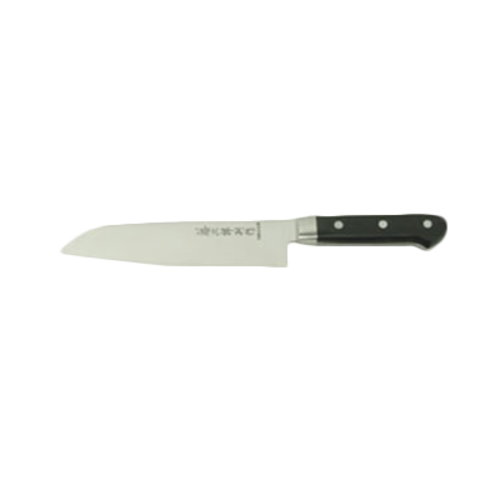


Stop accepting imprecision in prep work. This Japanese-style cow knife features a forged 8.25-inch blade with a narrow 1.75-inch profile, designed for controlled slicing, trimming, and portioning in high-volume kitchens. Professional teams will appreciate the balance between blade length and tip geometry for precise cuts, while maintenance crews will value the stainless construction that resists corrosion and retains its edge with routine honing.
LongDescription#@#NA#@@#Cleaning Instructions#@#Clean blade and handle after each shift. Rinse under warm water, apply mild detergent with a soft cloth, scrub away residue from the 8.25" Japanese steel blade and black polypropylene handle, then rinse. Sanitize food-contact surfaces with EPA-approved sanitizer, air dry or towel dry with a clean cloth, and store in a dry sheath or magnetic strip. Regular cleaning prevents cross-contamination of high-touch zones and preserves appearance and service life of furnishings.#@@#Additional Info#@#Thunder Group JAS012210 Japanese cow knife has an 8.25" steel blade, 1.75" width, forged construction, pointed tip, smooth edge, and a riveted black polypropylene handle for balance; it weighs 0.77 pounds and meets CSA standards.#@@#General Info#@#Description #@#
Stop accepting imprecision in prep work. This Japanese-style cow knife features a forged 8.25-inch blade with a narrow 1.75-inch profile, designed for controlled slicing, trimming, and portioning in high-volume kitchens. Professional teams will appreciate the balance between blade length and tip geometry for precise cuts, while maintenance crews will value the stainless construction that resists corrosion and retains its edge with routine honing.
#@@# Blade Geometry#@#
The blade measures 8.25 inches and tapers to a pointed tip, enabling accurate trimming and delicate work near bones or joints. Chefs achieve repeatable portion sizes and cleaner cut surfaces, which reduces waste during prep.
#@@# Material Performance#@#
Engineers selected Japanese steel for the blade, combining hardness and toughness for prolonged edge retention under commercial use. Teams will experience longer intervals between sharpening cycles, lowering downtime and sharpening costs.
#@@# Handle Construction#@#
Designers molded a riveted polypropylene handle in black to provide a secure grip under wet or oily conditions while resisting impact and temperature changes. Line cooks gain consistent hand placement and reduced slippage during repetitive tasks.
#@@# Edge Profile#@#
The blade features a smooth edge that supports fine slicing and push-cut techniques common in classical and modern preparations. Kitchen staff obtain uniform slices for plating and portion control, improving product presentation and cooking uniformity.
#@@# Forged Design#@#
Manufacturing employs a forged process to create structural continuity from heel to tip, enhancing rigidity and reducing flex during forceful cuts. Operators control the blade with predictable feedback, increasing speed and safety during high-volume operations.
#@@# Serviceability and Compliance#@#
The knife has a practical weight of 0.77 pounds and dimensions optimized for storage and handling in busy kitchens.
#@@#Delivery Details#@#
• Please ensure to handle the product with utmost care.
• Check if the product you have received has all the essential parts and accessories.
• Make sure to examine the product for damage before signing the delivery receipt.
• Contact customer service for delivery concerns.
• Delivery times may vary based on location.#@@#deliverynotes#@#NA#@@#Maintenance Guide#@#Inspect blade edge before each shift and hone with a 1000–3000 grit stone to maintain a precise cutting face. Sanitize handle and tang junction with a food-safe detergent; rinse and air dry to prevent corrosion. Store knife in a magnetic strip or knife block to protect the edge and reduce accident risk. Monitor rivets and replace units showing looseness. Schedule professional sharpening every 4–8 weeks under heavy use for consistent performance.