


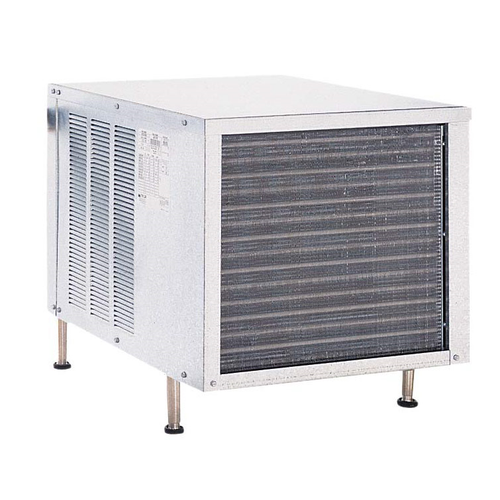
Handle large ice production without sacrificing system reliability with a compact remote condensing unit designed for continuous commercial use. This unit installs outdoors to reduce indoor heat load and sound levels, maintaining consistent cooling performance across extended operating cycles. Food service operators achieve stable refrigerant control and simplified service access to support uninterrupted ice delivery.
LongDescription#@#NA#@@#Cleaning Instructions#@#Unplug the unit and wait five minutes. Remove debris from fins with a soft brush and vacuum; avoid bent coils. Spray coils with approved cleaner, rinse with low-pressure water, and let dry. Inspect electrical connections at 208/230 volts and tighten loose terminals. Check refrigerant lines for leaks; repair any using certified technicians and R-449A refrigerant. Clean condensate drains and ensure 12" clearance on three sides to prevent overheating and fire risk.#@@#Additional Info#@#Taylor Company RC35 60HZ remote condensing unit uses R-449A refrigerant and 208/230 volts, providing efficient air-cooled performance for ice equipment.#@@#General Info#@#Description #@#
Handle large ice production without sacrificing system reliability with a compact remote condensing unit designed for continuous commercial use. This unit installs outdoors to reduce indoor heat load and sound levels, maintaining consistent cooling performance across extended operating cycles. Food service operators achieve stable refrigerant control and simplified service access to support uninterrupted ice delivery.
#@@# Condensing Capacity#@#
This unit uses R-449A refrigerant and supports systems requiring three condensing units for balanced load sharing and redundancy. Technicians will value the consistent performance of 208/230 volts electrical supply for commercial voltage compatibility.
#@@# Service Access#@#
Engineers access components easily thanks to service-friendly paneling and industry-standard mounting dimensions, which speed routine maintenance and reduce downtime. Field crews complete diagnostics faster when panels expose controls and compressor components without extensive disassembly.
#@@# Space Requirements#@#
Installers must allow 12 inches of clearance on three sides for adequate airflow and heat rejection to meet rated capacity. Planners allocate rooftop or exterior wall space using the unit depth of 23.25 inches, height of 23.38 inches, and width of 25.88 inches for accurate footprint planning.
#@@# Durability and Compliance#@#
Manufacturers assemble the unit to meet CSA and cULus certifications, ensuring regulatory compliance and safe operation in commercial installations. Operators depend on certified construction to satisfy code inspectors and warranty conditions.
#@@# Weight and Handling#@#
Service teams handle a 205-pound chassis with standard lifting practices and two-person handling for safe placement during installation. Project managers plan hoisting and transport accordingly to prevent site delays.
#@@#Delivery Details#@#
• Please ensure to handle the product with utmost care.
• Check if the product you have received has all the essential parts and accessories.
• Make sure to examine the product for damage before signing the delivery receipt.
• Contact customer service for delivery concerns.
• Delivery times may vary based on location.#@@#deliverynotes#@#NA#@@#Maintenance Guide#@#Inspect condenser fins weekly and remove debris with a soft brush to maintain 208/230 volts efficiency. Tighten electrical connections and verify voltage with a calibrated meter. Replace filters per manufacturer schedule and inspect refrigerant lines for R-449A leaks using approved detectors. Service fans and motor mounts every three months; lubricate bearings where applicable. Confirm unit clearance of 12" on three sides and ensure secure mounting to minimize vibration and wear.