

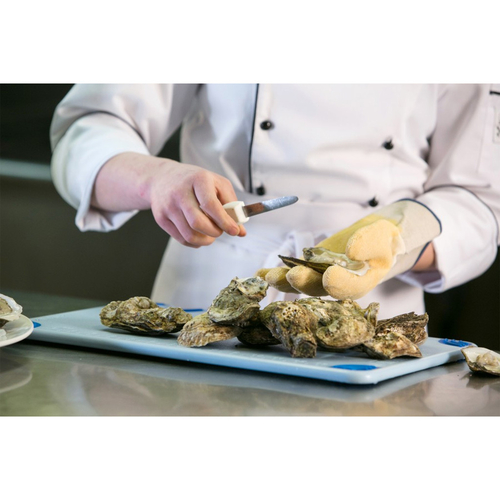
Manufactured to meet professional kitchen requirements and suitable for seafood handling, this glove supports safe food preparation practices in institutional and commercial settings. Procurement teams gain a reliable protective solution for schools, hospitals, bars, and restaurants.
LongDescription#@#NA#@@#Cleaning Instructions#@#Use glove for shucking; rinse with warm water and detergent after each shift, scrub high-touch areas like cuffs and wrist straps, then rinse thoroughly and air dry. Disinfect weekly with EPA-registered sanitizer per label, especially after handling raw shellfish. Cleaning prevents contamination of clean items and hands, deters pests by removing food residue, preserves material integrity, and supports health-code compliance. Inspect for cuts and replace when damaged.#@@#Additional Info#@#San Jamar 1000 natural rubber shucking glove fits one size, offers wet or dry grip, and provides cut and abrasion resistance for oyster prep; the 0.35-pound glove meets CSA guidance for foodservice PPE, ensuring safe seafood handling in kitchens.#@@#General Info#@#Description #@#
Manufactured to meet professional kitchen requirements and suitable for seafood handling, this glove supports safe food preparation practices in institutional and commercial settings. Procurement teams gain a reliable protective solution for schools, hospitals, bars, and restaurants.#@@#Delivery Details#@#
• Please ensure to handle the product with utmost care.
• Check if the product you have received has all the essential parts and accessories.
• Make sure to examine the product for damage before signing the delivery receipt.
• Contact customer service for delivery concerns.
• Delivery times may vary based on location.#@@#deliverynotes#@#NA#@@#Maintenance Guide#@#Inspect the San Jamar 1000 glove before each shift for cuts or damage; discard if integrity fails. Rinse with warm water to remove debris, then wash with mild detergent and a soft brush. Air dry on a ventilated rack away from direct heat to prevent rubber degradation. Store flat in a cool area below 25°C and avoid prolonged UV exposure. Rotate inventory regularly and replace after chemical exposure or visible wear to ensure safety and compliance with CSA guidelines.