

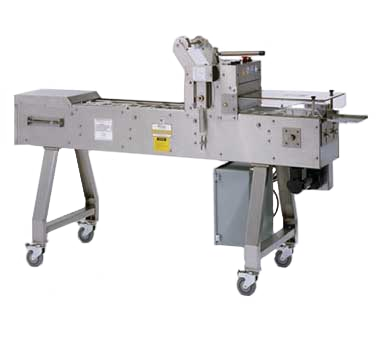
Stop sacrificing throughput for seal integrity. This tray lidder delivers continuous, automatic sealing at production rates that satisfy cafeteria lines, catering operations, and high-volume kitchens without compromising package strength or seal consistency. Designed for conveyor workflows, the system integrates anodized aluminum and stainless steel construction with an automatic eject to maintain steady output and reduce operator intervention.
LongDescription#@#NA#@@#Cleaning Instructions#@#Unplug the Oliver 1808 MX before cleaning. Remove film rolls and trays. Wipe conveyor and carrier with mild soap solution and a soft cloth. Clean sealing bar with non-abrasive cleaner; inspect for residue and replace worn seals. Vacuum debris from vents and condenser areas to preserve airflow. Rinse and dry components thoroughly before reconnecting power. Regular cleaning prevents contamination, reduces fire risk, lowers energy use, and extends equipment life.#@@#Additional Info#@#The Oliver 1808 MX Tray Lidder seals up to 35 packages per minute with auto-seal and auto-eject. It fits trays up to 8-1/2" W x 10" L x 3-1/4" D, supports roll widths to 9", and requires 10 amps at 200-240v, 50/60 Hz, single-phase.#@@#General Info#@#Description #@#
Stop sacrificing throughput for seal integrity. This tray lidder delivers continuous, automatic sealing at production rates that satisfy cafeteria lines, catering operations, and high-volume kitchens without compromising package strength or seal consistency. Designed for conveyor workflows, the system integrates anodized aluminum and stainless steel construction with an automatic eject to maintain steady output and reduce operator intervention.
#@@# Automatic Sealing#@#
The system seals up to 35 packages per minute under rated conditions, enabling processing that meets peak service windows. Manufacturers specify auto-seal with auto-eject to minimize bottlenecks and reduce cycle variability.
#@@# Conveyor Integration#@#
A conveyor-style carrier handles tray movement and aligns lids precisely for consistent film application. Operators gain repeatable placement across runs, reducing rework and improving throughput.
#@@# Tray Capacity#@#
The unit accepts trays up to 8-1/2 inches wide by 10 inches long with a depth of 3-1/4 inches, accommodating full meal trays and bulk items. Facilities can standardize tray sizes to optimize load per cycle and maximize floor productivity.
#@@# Roll Film Specs#@#
The machine supports roll widths to 9 inches and maximum roll diameters of 9-1/2 inches, allowing extended runtime between film changes. Production teams benefit from longer roll life and fewer maintenance interruptions.
#@@# Electrical Requirements#@#
The lidder operates on 200-240 volts at 10 amps and runs on single-phase 50/60 hertz power, matching common commercial electrical setups. Planners can integrate the unit without specialized power upgrades in many facilities.
#@@# Construction Durability#@#
Anodized aluminum combined with stainless-steel components resists corrosion and tolerates continuous operation in demanding kitchen environments. Maintenance crews find access points for routine cleaning, and the robust frame reduces vibration and alignment drift.
#@@#Delivery Details#@#
• Please ensure to handle the product with utmost care.
• Check if the product you have received has all the essential parts and accessories.
• Make sure to examine the product for damage before signing the delivery receipt.
• Contact customer service for delivery concerns.
• Delivery times may vary based on location.#@@#deliverynotes#@#NA#@@#Maintenance Guide#@#Maintain the Oliver 1808 MX Tray Lidder/Packaging System with scheduled cleaning and inspection to ensure continuous throughput. Remove film debris and sanitize the conveyor, tray carrier, and sealing surfaces after each shift using a mild detergent; avoid abrasive pads. Verify roll alignment and tension; inspect seal bar edges for wear and replace when seals show degradation. Confirm electrical connections, 10 amps supply, 200/240v, and test auto-eject and sensors monthly to prevent downtime.