

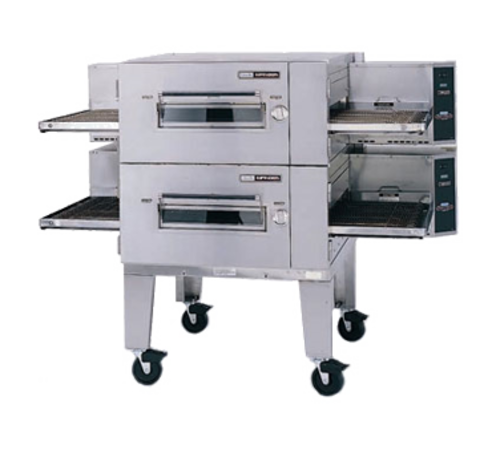
Engineers designed the system for continuous operation and precise thermal management in demanding foodservice environments.
LongDescription#@#NA#@@#Cleaning Instructions#@#Unplug the oven and let it cool. Remove crumbs and debris with a brush, vacuum, or compressed air. Wipe the interior and conveyor with a mild detergent and a non-abrasive cloth; rinse and dry thoroughly. Clean vents and grease traps daily to prevent fire risk. Inspect door seals and electrical connections; tighten loose fasteners. Clean condenser coils on refrigeration units regularly to improve efficiency and reduce costs. Ensure surfaces are safe for food before use.#@@#Additional Info#@#The Lincoln Foodservice 1600-2E Impinger conveyor oven operates at 208 volts and 22.0 kW, providing consistent throughput for high-volume foodservice. It measures 80" wide, 63.38" high, 60.5" deep, weighs 1,919 pounds, and meets CSA standards.#@@#General Info#@#Description #@#
Engineers designed the system for continuous operation and precise thermal management in demanding foodservice environments.
The oven uses impingement airflow combined with conveyor movement to shorten cook times while maintaining uniform heat transfer. Operators achieve consistent surface browning and internal temperatures across full trays, reducing rework and waste.
A 22.0kW electric powertrain and 208 volts supply robust thermal input suited for back-of-house volume production. Technicians can rely on stable wattage between 20,000 and 29,300 Watts to handle dense loads without output fluctuation.
With a compact height of 63.38 inches and 80-inch width footprint, the unit fits under low clearances and integrates into existing lines. Planners gain installation flexibility while preserving conveyor length for adequate dwell time.
The package supports continuous service with a 1,919 pound chassis that resists distortion under thermal cycling. Maintenance crews find access panels and service points simplified for routine inspection and repair.
Conveyor throughput adapts to demand through adjustable belt speed and consistent impingement intensity to match menu items. Kitchen managers balance production rates and product quality without altering cooking stations.
Engineers designed electrical systems to meet commercial standards with CSA-recognized components and clear voltage labeling for safe connection. Facility teams follow defined electrical requirements to ensure reliable, code-compliant operation.
#@@#Delivery Details#@#
• Please ensure to handle the product with utmost care.
• Check if the product you have received has all the essential parts and accessories.
• Make sure to examine the product for damage before signing the delivery receipt.
• Contact customer service for delivery concerns.
• Delivery times may vary based on location.#@@#deliverynotes#@#NA#@@#Maintenance Guide#@#Inspect conveyor belts daily for wear and alignment; tighten tracking bolts and replace frayed sections to prevent jams. Clean air filters and exhaust ducts weekly to maintain airflow and temperature consistency. Descale steam lines monthly using manufacturer-approved agents and flush with potable water. Lubricate chain links and bearings every 500 operating hours with food-grade lubricant. Verify 208v connections and torque electrical terminals quarterly to prevent heat buildup.