

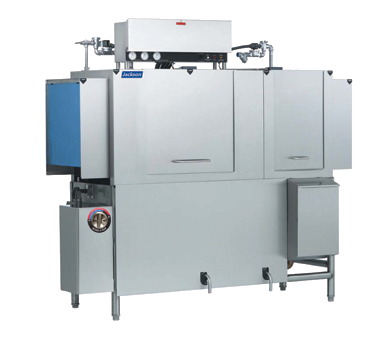
Stop compromising throughput for sanitation. This conveyor dishwasher delivers steady, measurable cleaning capacity while maintaining low-temperature chemical sanitizing for sensitive environments. It supports continuous operations in high-volume kitchens, allowing operators to gain predictable cycle times and simplified utility requirements without sacrificing cleaning consistency.
LongDescription#@#NA#@@#Cleaning Instructions#@#Unplug unit and shut chemical feed. Remove racks and scrape solids. Flush pre-wash and clean wash tank with a mild detergent; brush pump strainer and filters. Wipe conveyor rails and door seals with non-abrasive cleaner. Descale spray nozzles and clean condenser coils on schedule to maintain efficiency and lower energy use. Rinse all surfaces, sanitize per CSA and NSFCertified guidelines, dry thoroughly, then reconnect power and run an empty cycle to verify operation.#@@#Additional Info#@#Jackson WWS AJX-66CEL low-temp chemical conveyor dishwasher features stainless steel, electric tank heat, and a pre-wash tank to process about 220 racks/hour; CSA and NSF certified, dimensions: 31" depth, 81.25" width, 75.5" height, weight 1000 lbs.#@@#General Info#@#Description #@#
Stop compromising throughput for sanitation. This conveyor dishwasher delivers steady, measurable cleaning capacity while maintaining low-temperature chemical sanitizing for sensitive environments. It supports continuous operations in high-volume kitchens, allowing operators to gain predictable cycle times and simplified utility requirements without sacrificing cleaning consistency.
#@@# Tank With Pre-Wash#@#
The unit combines a dedicated pre-wash section with a single wash tank to remove gross soils before chemical sanitizing. This reduces rewash incidents and lowers chemical load, shortening overall cycle time and preserving rack turnover rates during busy service periods.
#@@# Low Temp Chemical#@#
The system employs low-temperature chemical sanitizing to achieve the required microbial reduction without boiler-level heat. This approach reduces energy demand compared to high-temperature alternatives, allowing facilities to rely on consistent sanitizing performance while avoiding extended warm-up periods.
#@@# Rack Capacity#@#
The dishwasher processes approximately 220 racks per hour, supporting sustained throughput for large dining venues, hospitals, and universities. Managers can confidently schedule service windows, knowing the unit maintains steady output under continuous load.
#@@# Electric Tank Heat#@#
Electric heating for the wash tank provides precise temperature control and rapid recovery between cycles to sustain cleaning performance. Maintenance teams can easily monitor and adjust elements, minimizing downtime during peak shifts.
#@@# Stainless Steel Construction#@#
Full stainless steel construction resists corrosion and simplifies daily cleaning, extending service life in demanding commercial settings. Staff will perform routine sanitation faster, and inspectors will find surfaces that meet institutional standards.
#@@# Certifications And Compliance#@#
The machine carries CSA and NSF certifications, confirming regulatory compliance for commercial dishwashing applications.
#@@#Delivery Details#@#
• Please ensure to handle the product with utmost care.
• Check if the product you have received has all the essential parts and accessories.
• Make sure to examine the product for damage before signing the delivery receipt.
• Contact customer service for delivery concerns.
• Delivery times may vary based on location.#@@#deliverynotes#@#Upon confirmation of completed payment, Culinary Depot will ship/deliver the Jackson WWS AJX-66CEL Conveyor Dishwasher within # business days.#@@#Maintenance Guide#@#Inspect conveyor alignment weekly and adjust tension to prevent jams and uneven wear. Clean pre-wash and tank interiors daily using approved alkaline detergents; remove food solids and descale with manufacturer-recommended agents to maintain heat transfer. Flush chemical lines and verify pump pressure against Jackson WWS specifications before each shift. Replace worn door seals and spray nozzles when flow drops. Document maintenance and CSA or NSF inspection dates for compliance.