


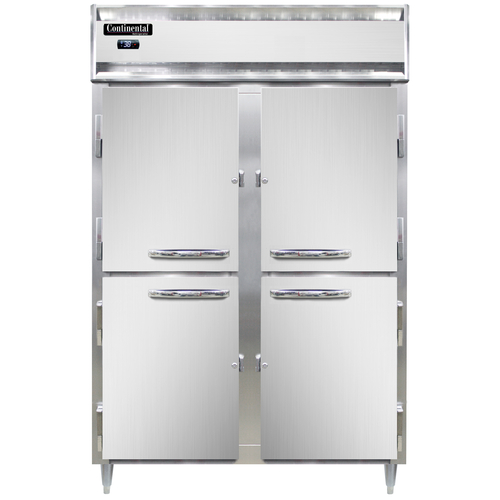
For operations that require reliable cold storage without compromise, this two-section reach-in refrigerator delivers consistent temperature control, large usable capacity, and durable construction in a compact footprint. Designed for high-traffic kitchens, it supports continuous loading and frequent door cycles while maintaining product integrity across 50 Cu. Ft. of storage. Engineers specified efficient components and certified safety features to reduce operating costs and meet regulatory requirements for commercial settings.
LongDescription#@#NA#@@#Cleaning Instructions#@#Unplug the unit and remove contents. Mix mild detergent with warm water and wipe all interior surfaces with a soft cloth. Clean door gaskets and inspect seals for wear; replace if damaged. Vacuum condenser coils monthly to maintain efficiency. Degrease exterior and vents with non-abrasive cleaner. Sanitize food-contact surfaces with EPA-approved sanitizer and let air dry. Schedule deep clean of compressor area quarterly to prevent breakdowns and reduce fire risk.#@@#Additional Info#@#Continental Refrigerator’s D2RNHD two-section reach-in stores 50 cu. ft. in a 52" W stainless steel cabinet, uses R-290 refrigerant, operates at 115v/60Hz/1-Ph drawing 6.9 amps, meets CSA and ENERGY STAR standards, and weighs 535 pounds.#@@#General Info#@#Description #@#
For operations that require reliable cold storage without compromise, this two-section reach-in refrigerator delivers consistent temperature control, large usable capacity, and durable construction in a compact footprint. Designed for high-traffic kitchens, it supports continuous loading and frequent door cycles while maintaining product integrity across 50 Cu. Ft. of storage. Engineers specified efficient components and certified safety features to reduce operating costs and meet regulatory requirements for commercial settings.
#@@# Top Mounted Compressor#@#
Engineers placed the compressor on top to simplify service access and improve airflow management, which reduces heat buildup at the cabinet base. Technicians will perform maintenance tasks faster, minimizing downtime and preserving valuable production hours.
#@@# Solid Door Construction#@#
Manufacturers assembled the unit with two solid doors to maximize thermal retention and prevent light exposure that degrades stored items. Operators will notice stable internal temperatures during repeated open cycles, which preserves food quality and reduces waste.
#@@# Stainless Steel Exterior#@#
Designers used stainless steel and aluminum on the exterior to provide abrasion resistance and straightforward surface sanitation, which supports fast daily cleaning protocols. Supervisors will find the finish withstands heavy use and maintains a professional kitchen appearance.
#@@# R-290 Refrigerant#@#
Specifying R-290 refrigerant reduces global warming potential while delivering high thermodynamic efficiency, which lowers energy consumption under typical load profiles. Facility managers can document compliance with evolving efficiency standards while achieving predictable cooling performance.
#@@# 50 Cu. Ft. Capacity#@#
The cabinet offers fifty cubic feet of internal volume across two sections to hold full-size pans and bulk storage items in a single footprint, which improves workflow and reduces the need for multiple units.
#@@#Delivery Details#@#
• Please ensure to handle the product with utmost care.
• Check if the product you have received has all the essential parts and accessories.
• Make sure to examine the product for damage before signing the delivery receipt.
• Contact customer service for delivery concerns.
• Delivery times may vary based on location.#@@#deliverynotes#@#Upon confirmation of completed payment, Culinary Depot will ship/deliver the Continental Refrigerator D2RNHD Designer Line Refrigerator.#@@#Maintenance Guide#@#Inspect condenser coils monthly and remove dust with a soft brush to maintain heat transfer efficiency. Drain and clean the condensate pan weekly to prevent bacterial growth and odors. Verify door gaskets for cracks and deflection; replace seals showing wear to preserve temperature stability. Calibrate thermostat quarterly and log temperature readings to ensure compliance with CSA and NSf standards. Tighten electrical connections and verify 115v supply and 1-Ph circuit integrity.