

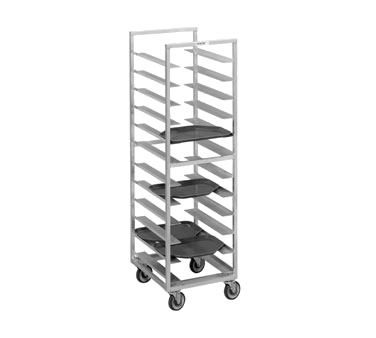
The Channel T445A tray rack delivers organized, mobile storage for high-volume foodservice environments with capacity for 40 trays. Cafeterias, hospitals, universities, and large kitchens benefit from durable, NSF-certified aluminum construction that supports rapid staging, transport, and service.
LongDescription#@#NA#@@#Cleaning Instructions#@#Wipe trays, frame, casters, and high-touch zones with a microfiber cloth and a neutral detergent; rinse with clean water and dry immediately. Sanitize handles, chair backs, menu covers, and tray edges with an EPA-registered sanitizer per label contact time. Inspect and remove food debris under shelves and between tray slots to deter pests and prevent cross-contamination. Regular cleaning maintains appearance, supports health-code compliance, and reduces contamination risk.#@@#Additional Info#@#Channel T445A Cafeteria Tray Rack holds 40 trays in a trapezoidal frame, measuring 23" W x 30" D x 70" H. It features aluminum construction, 3" angle spacing, and rolls on 5" swivel casters. Weighs 64 lbs, NSF certified, made in USA.#@@#General Info#@#Description #@#
The Channel T445A tray rack delivers organized, mobile storage for high-volume foodservice environments with capacity for 40 trays. Cafeterias, hospitals, universities, and large kitchens benefit from durable, NSF-certified aluminum construction that supports rapid staging, transport, and service.
Aluminum frame resists corrosion and supports continuous duty in humid dishroom and serving environments. The unit weighs 64 pounds and ships with end-load configuration to simplify loading and unloading during peak service.
Designed to hold forty trays in a single section, the rack yields two trays per level and accommodates up to twenty pairs of slides. Operators can stage complete meal sets for efficient line feeding and rapid turnover during service periods.
Five-inch swivel plate casters provide multidirectional maneuverability and reduce operator exertion while moving fully loaded racks. The caster specification supports smooth travel across kitchen floors and turnover between service areas.
Facilities with limited floor area preserve circulation space without sacrificing tray volume.
NSF certification verifies materials and design meet sanitation standards commonly required by institutions and healthcare foodservice programs. Production in the USA simplifies procurement for organizations tracking domestic sourcing.
End-load orientation streamlines loading workflows at serving lines and plate-up stations, reducing time per tray compared with front-load alternatives. Aluminum slide spacing and rack geometry minimize tray edge contact to reduce wear on culinary serviceware.
#@@#Delivery Details#@#
• Please ensure to handle the product with utmost care.
• Check if the product you have received has all the essential parts and accessories.
• Make sure to examine the product for damage before signing the delivery receipt.
• Contact customer service for delivery concerns.
• Delivery times may vary based on location.#@@#deliverynotes#@#NA#@@#Maintenance Guide#@#Inspect caster mounting hardware monthly and tighten fasteners to maintain mobility and safety. Clean aluminum surfaces with a pH-neutral detergent, rinse thoroughly, and dry to prevent oxidation. Remove trays and wash in warm, soapy water; air-dry fully before reinsertion to prevent corrosion. Verify door clearance and floor level to avoid rack tipping. Lubricate swivel plates lightly with food-grade lubricant every six months to ensure smooth rotation.