

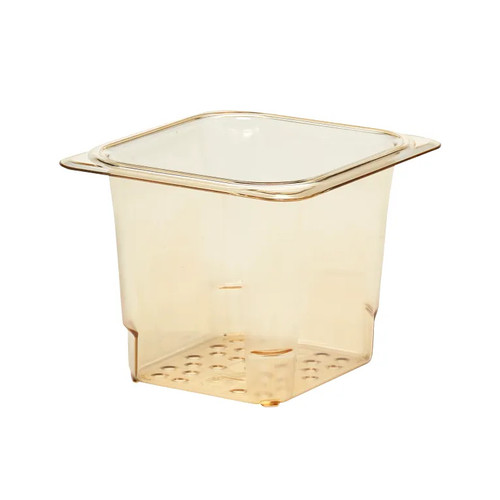
Supplied six per case to support multi-station kitchens and bulk replenishment strategies, reducing ordering frequency and downtime. Purchasing managers align supply levels with service volume through consistent case quantities.
LongDescription#@#NA#@@#Cleaning Instructions#@#Wipe the Cambro amber polycarbonate colander with a soft cloth and mild detergent, rinse, and air dry. Sanitize high-touch items like pan rims and handles with an EPA-approved sanitizer at recommended dilution. Inspect for cracks before use and store dry to prevent residue buildup. Regular cleaning prevents germ transfer to customers and staff, supports health-code compliance, deters pests, and preserves pan appearance and function.#@@#Additional Info#@#Cambro’s 65CLRHP150 amber H-Pan colander fits 1/6 size food pans and measures 5" deep, manufactured from durable polycarbonate for -40°F to 210°F use, NSF certified and made in USA, sold six per case, weighing 3.06 pounds each.#@@#General Info#@#Description #@#
Supplied six per case to support multi-station kitchens and bulk replenishment strategies, reducing ordering frequency and downtime. Purchasing managers align supply levels with service volume through consistent case quantities.#@@#Delivery Details#@#
• Please ensure to handle the product with utmost care.
• Check if the product you have received has all the essential parts and accessories.
• Make sure to examine the product for damage before signing the delivery receipt.
• Contact customer service for delivery concerns.
• Delivery times may vary based on location.#@@#deliverynotes#@#NA#@@#Maintenance Guide#@#Inspect colanders daily for cracks or warping; replace units that show stress to prevent contamination. Remove food particles after each use and sanitize with a solution of 50–200 ppm chlorine for at least one minute; rinse and air dry. Clean with nonabrasive detergents and soft brushes to protect polycarbonate surfaces. Verify NSF compliance labels periodically and document inspections. Store stacked loosely to avoid distortion and maintain temperature exposure between -40°F and 210°F.