

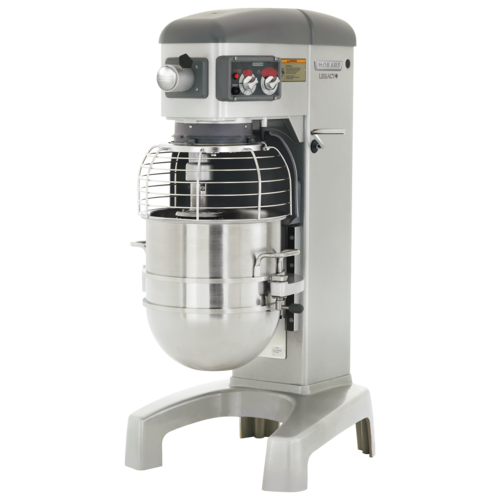
Engineered for continuous production without sacrificing consistency, this heavy-duty planetary mixer offers steady power and precise control for high-demand kitchens. Designed for facilities requiring reliable mixing at scale, it features a 40 Qt. bowl paired with a 1.5 HP motor output to efficiently process large batches. Operators achieve predictable results across doughs, batters, and fillings while minimizing downtime through robust construction and easily serviceable components.
LongDescription#@#NA#@@#Cleaning Instructions#@#Unplug the mixer and lock the lift before cleaning. Remove bowl, agitator and accessories; wash in warm, soapy water and rinse. Wipe exterior with a non-abrasive cleaner and a soft cloth. Clean vents and motor housing with compressed air to remove grease. Sanitize food-contact parts per CSA guidelines and air dry. Inspect seals and fasteners; tighten or replace as needed. Regular cleaning prevents contamination, fires, high energy use, and equipment failure.#@@#Additional Info#@#Hobart HL400-4 40 Qt. Legacy Planetary Mixer offers 1.5 HP power with a 200/240v motor, three speeds, and a 40 quart stainless bowl for high-volume production; CSA certified, this 421-pound mixer supports continuous commercial use.#@@#General Info#@#Description #@#
Engineered for continuous production without sacrificing consistency, this heavy-duty planetary mixer offers steady power and precise control for high-demand kitchens. Designed for facilities requiring reliable mixing at scale, it features a 40 Qt. bowl paired with a 1.5 HP motor output to efficiently process large batches. Operators achieve predictable results across doughs, batters, and fillings while minimizing downtime through robust construction and easily serviceable components.
#@@# Motor Power#@#
A 1.5 HP motor delivers sustained torque for dense mixes and extended runs. Engineers selected this power rating to balance high output with thermal stability during 200/240v operation.
#@@# Large Bowl Capacity#@#
The 40 Qt. bowl accommodates substantial batch sizes, meeting volume requirements for cafeterias, bakeries, and catering operations. Chefs can reduce cycle counts while maintaining consistent product characteristics across multiple pans.
#@@# Three Speed Control#@#
Three speeds allow staff to match mixing action to ingredient stages, from initial incorporation to final development. Technicians can quickly adjust speed to prevent overmixing and maintain gluten structure in doughs.
#@@# Lift Style Design#@#
The lift style mechanism removes the bowl from the mixing zone for safe loading and unloading while ensuring alignment during operation. Maintenance teams can access bowl seals and attachments without disassembling major drive components.
#@@# Floor Mixer Platform#@#
A floor-mounted configuration stabilizes the unit during heavy loads and reduces vibration transmitted to the workspace. Facilities achieve steady operation on standard commercial floors with the included leveling provisions.
#@@# NSF Certification#@#
NSF certification confirms compliance with sanitation and safety criteria relevant to food service environments. Managers rely on this credential for inspections and to maintain HACCP-aligned protocols.
#@@#Delivery Details#@#
• Please ensure to handle the product with utmost care.
• Check if the product you have received has all the essential parts and accessories.
• Make sure to examine the product for damage before signing the delivery receipt.
• Contact customer service for delivery concerns.
• Delivery times may vary based on location.#@@#deliverynotes#@#Upon confirmation of completed payment, Culinary Depot will ship/deliver the Hobart HL400-4 Commercial Mixer within # business days.#@@#Maintenance Guide#@#Inspect the Hobart HL400-4 mixer daily for loose fasteners and damaged wiring; tighten bolts and clamp covers to specified torque values. Lubricate the planetary gear and shaft with food-grade grease every 250 hours and record intervals. Clean the bowl, agitator, and splashguard after each use with warm, soapy water and sanitize per protocol; avoid abrasive pads. Verify belt tension weekly and replace worn belts. Test CSA-listed safety interlocks monthly and document results.